Cycle Babble: People



Riding a high wheeled bicycle was not an old man’s sport. The risks of a fall and the need to be fit to mount the bicycle were two major deterrents, but the single largest barrier may well have been a social one. In the mid Victorian period, there were very few older men who exercised vigorously, it was accepted that middle aged men led a fairly sedentary life.(3) These early bicycles were also expensive, costing about $100 Canadian; therefore, riders almost always belonged to the business or professional classes.(4) At most, we can only infer from Norcliffe’s analysis that Charlie Miner would have been from a socially elite crowd that benefited from the privileges that come with wealth. In this sense, the early bicycle and their riders did not contribute a lot to modernity. Rather, the early days of cycling kept many people within traditional economic, social, and age boundaries.
Charlie Miner
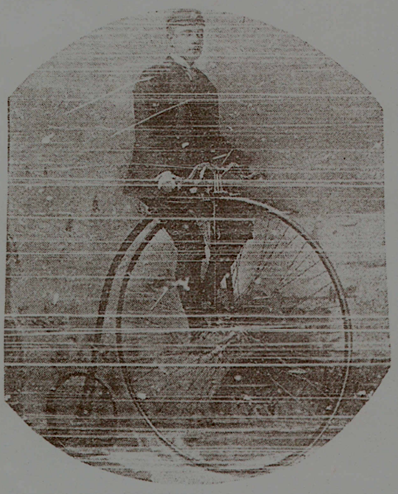
"When Bicycle Riding was a real balancing art – Charlie Miner is seen [here] on one of the first bicycles to make its appearance in Victoria. A Penny Farthing as it was called required plenty of skill in handling. Miner, who was a crack rider in the early days, is still living in the city, and retains his interest in bike racing, being in attendance at all the local meets."(1)
Charlie Miner on his penny farthing. Royal BC Museum BC Archives, Vertical Files, Mflm Reel 154, frame 1141, Victoria Daily Times, July 31, 1937.
According to Norcliffe, in The Ride to Modernity, the effects of the early Penny Farthing on society can be focused towards a select group of young, upper-middle class men.(2) Riders of the early bicycle craze of the 1880s usually had one thing in common; they were young, fit, and generally well off.
Copyright 2009. Jason Chisholm